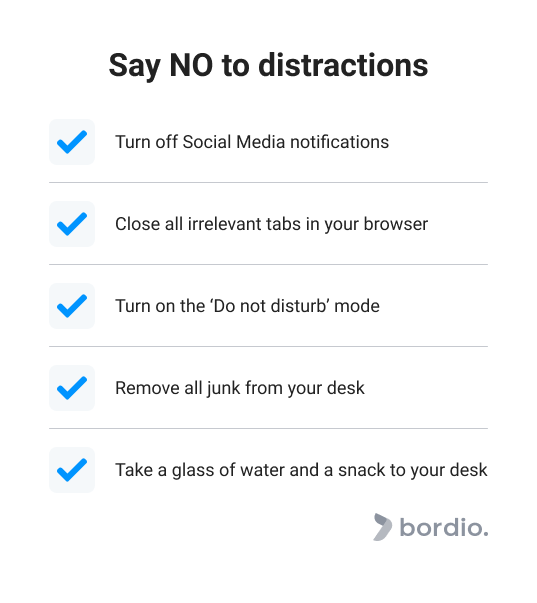
Managing Distractions at Work: Boosting Productivity and Focus
In today's fast-paced and digitized work environment, managing distractions is a crucial skill for achieving productivity and focus. With numerous interruptions, tempting digital distractions, and a constant influx of tasks, it's easy to get sidetracked. However, acknowledging the impact of distractions is the first step towards reclaiming control and enhancing overall workflow efficiency.Understanding Common Workplace Distractions
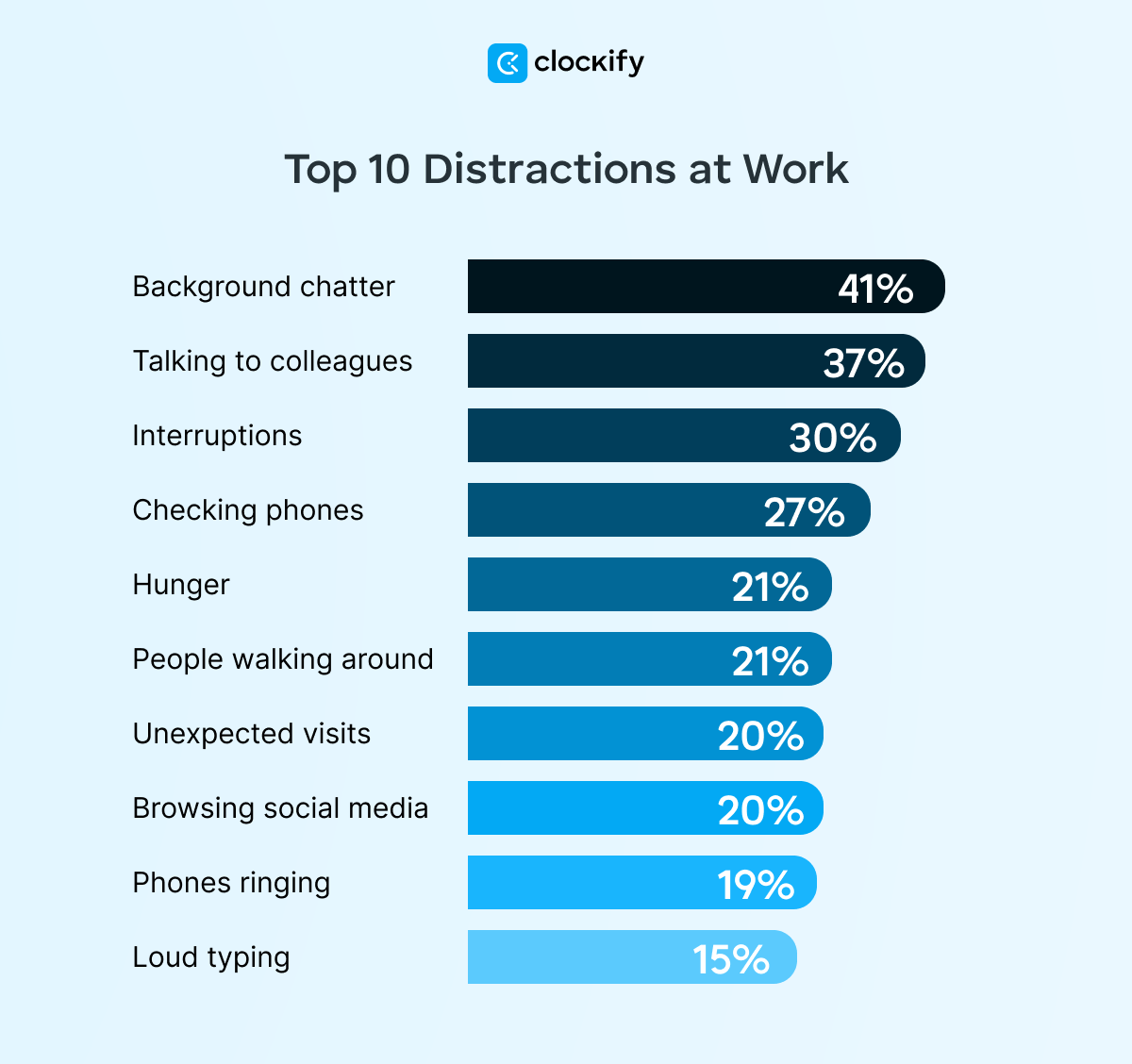
Before developing strategies to manage distractions, it's essential to acknowledge the various types of workplace distractions. These may include:- Visual distractions: social media, emails, and instant messaging
- Auditory distractions: noise, conversations, and background chatter
- Cognitive distractions: multitasking, procrastination, and mental fatigue
Recognizing the Impact of Distractions
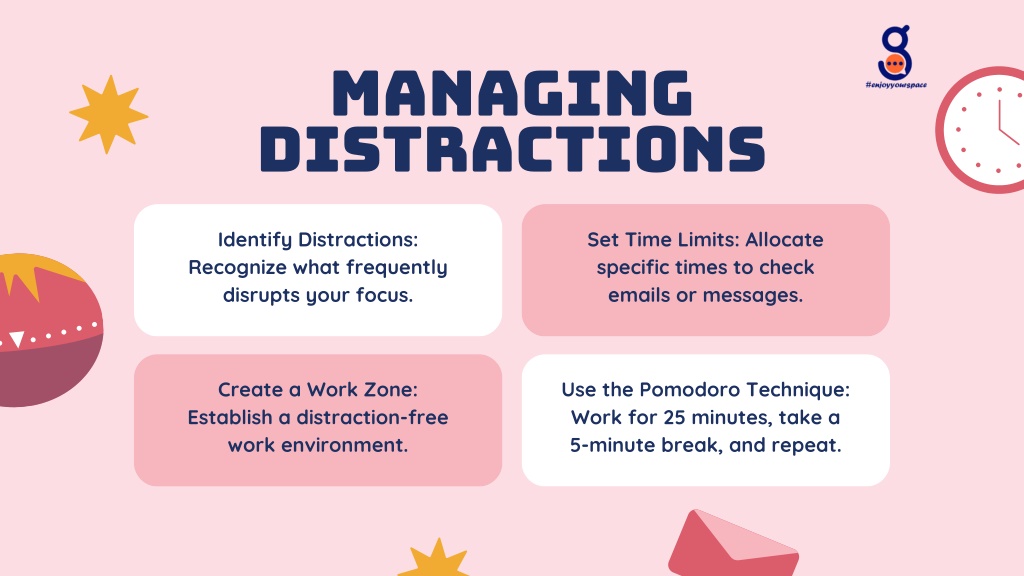
Implementing Strategies to Manage Distractions
To effectively manage distractions at work, consider implementing the following strategies:- Designate a quiet workspace**: Create a dedicated workspace with minimal interruptions and distractions.
- Use technology to your advantage**: Utilize tools like website blockers (e.g., Freedom or SelfControl), project management software (e.g., Trello or Asana), and focus-enhancing apps (e.g., Focus@Will or Noisli).
- Develop a schedule and set realistic goals**: Prioritize tasks, allocate specific time slots for work, and break tasks into manageable chunks to maintain focus.
- Practice the Pomodoro Technique**: Intersperse focused work intervals (typically 25 minutes) with regular breaks to help manage mental fatigue and maintain concentration.
- Communicate with your team and manager**: Establish clear boundaries and expectations to minimize interruptions and ensure a supportive work environment.