Solutions to Managing Information Overload: Strategies for a Productive Workplace
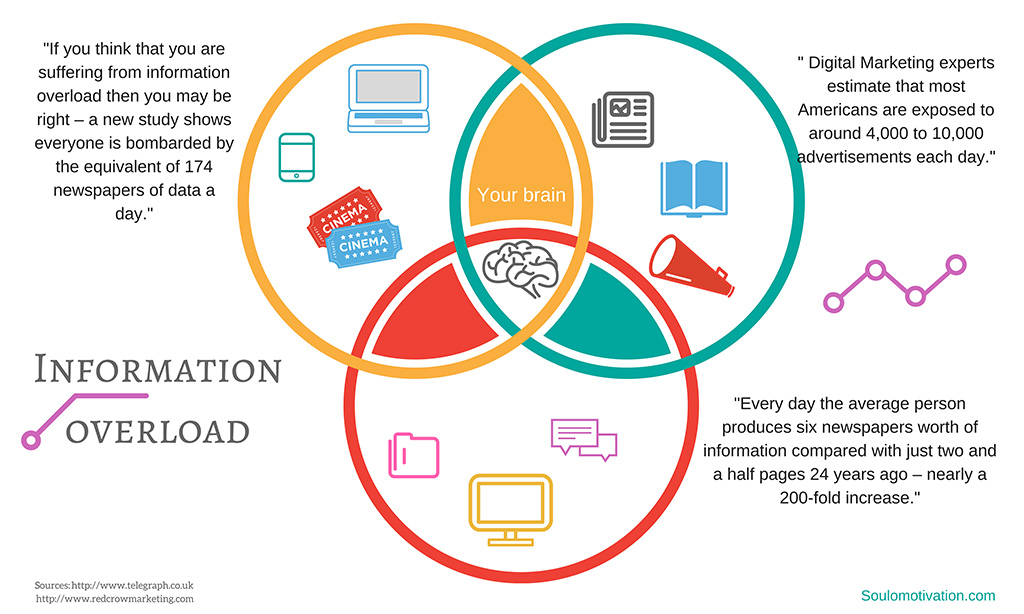
The exponential growth of digital information has led to a pervasive problem of information overload, affecting decision-making, productivity, and well-being. As a result, businesses and individuals are finding it increasingly difficult to navigate the constant flow of information and make sense of it all. In this article, we will explore the various effects of information overload, its underlying causes, and strategies for managing it.
What is Information Overload?
Information overload refers to the state in which an individual is exposed to more information than they can effectively process, manage, or use. In today's digital age, where data is constantly being generated and disseminated through various channels such as the internet, social media, news outlets, and emails, the overwhelming amount of available information can lead to confusion, anxiety, and decreased productivity.
Causes of Information Overload
Information overload occurs frequently in the modern workplace for various reasons, including:
- The increase of digital communication tools, making it easier to share information but also contributing to the noise and distractions.
- The rise of remote working, which has increased the need for digital communication and collaboration tools.
- The growing use of social media and online platforms for work-related purposes.
- The pressure to stay up-to-date with industry trends, news, and developments.
Consequences of Information Overload
Information overload has serious consequences for both businesses and individuals. Some of the effects include:
- Decreased productivity and efficiency.
- Increased stress and anxiety levels.
- Difficulty making informed decisions.
- Time wasted on non-essential tasks.
- Decreased job satisfaction and engagement.

Strategies for Managing Information Overload
Fortunately, there are several strategies that can help individuals and businesses manage information overload:
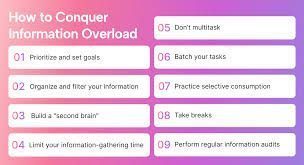
- Set Boundaries: Establish clear boundaries around your work hours, communication channels, and digital tools to avoid distractions and minimize the amount of information you need to process.
- Use Digital Tools**: Utilize digital tools such as email management systems, content aggregators, and task management apps to organize, filter, and streamline your content.
- Prioritize and Focus**: Prioritize your tasks and focus on the most important ones first, eliminating non-essential tasks and minimizing distractions.
- Take Breaks and Rest**: Take regular breaks and get enough sleep to avoid burnout and maintain your ability to process information effectively.
- Seek Support**: Collaborate with colleagues, managers, and other stakeholders to share information, tasks, and responsibilities and minimize the burden of information overload.
- Continuously Monitor and Adjust**: Continuously monitor your information intake and adjust your strategies as needed to maintain a healthy balance between information consumption and productivity.
Conclusion
Information overload is a pervasive problem that can have serious consequences for businesses and individuals. However, by understanding the causes and effects of information overload and implementing effective strategies for managing it, individuals and organizations can regain control over their workflow, improve productivity, and maintain a healthy work-life balance.
Additional Resources
For more information on managing information overload, explore the following resources:
- Discover how to overcome information overload with expert strategies from Sheena Iyengar.
- Learn how to manage information overload and stay focused at work with Slack.
- Explore the challenges of information overloading in the digital age and discover effective strategies and solutions for businesses to manage data efficiently.