Protecting Your Financial Security Online: A Guide to Staying Safe in the Digital World
In today's digital age, online security is more important than ever. With identity theft and financial fraud on the rise, it's essential to take proactive steps to protect yourself and your financial information. In this article, we'll explore the importance of protecting your financial security online, the ways in which cybercriminals work, and provide you with 10 actionable tips and best practices to keep your personal and financial information secure.
The Importance of Online Security
Most cybercriminals have two main goals: to steal your money and your identity. Knowing how to spot malicious cyber activities, how they work, and what you can do, are essential in helping to protect yourself and your finances. Online security is not just about protecting your personal data, but also about safeguarding your financial well-being and reputation.
How Cybercriminals Work
Scammers use a variety of tactics to obtain sensitive information, including phishing emails, fake emails posing as legitimate companies, and online scams that trick you into giving away your personal and financial information. To stay ahead of these cybercriminals, it's crucial to educate yourself on the warning signs of identity theft and how to protect yourself online.
10 Tips to Protect Your Financial Security Online
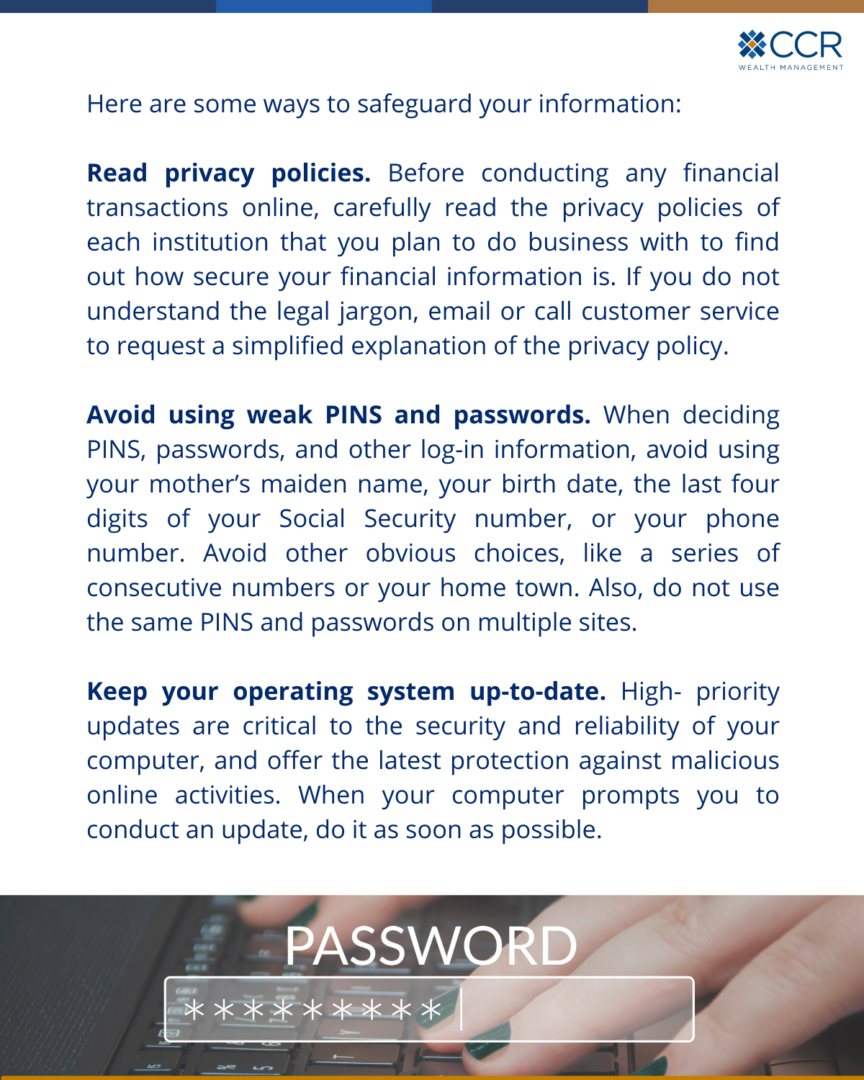
- Use strong passwords and multi-factor authentication: Use unique and complex passwords for each account, and enable multi-factor authentication whenever possible.
- Keep your software up to date: Regularly update your operating system, browser, and other software to ensure you have the latest security patches.
- Use a firewall and anti-virus protection: Install a reputable firewall and anti-virus software to protect your device and network from malware and viruses.
- Be cautious of public Wi-Fi: Avoid using public Wi-Fi networks to access sensitive information, and use a VPN whenever you connect to an unsecured network.
- Monitor your accounts and credit report: Regularly check your bank and credit card statements, as well as your credit report, for any suspicious activity.
- Shred financial documents: Properly dispose of financial documents, such as receipts and statements, to prevent others from accessing sensitive information.
- Use encryption: Use encryption to protect sensitive information, such as passwords and credit card numbers, when transmitting or storing it online.
- Verify online transactions: Verify the legitimacy of online transactions, and never provide sensitive information to unsolicited requests or emails.
- Use two-factor authentication for online accounts: Enable two-factor authentication for online accounts, such as email, social media, and banking, to add an extra layer of security.
- Regularly back up your data: Regularly back up your important files and data to prevent loss in case of a cyber attack or system failure.
Additional Resources
If you're concerned about your online security or suspect financial fraud, there are several resources available to help. The Consumer Financial Protection Bureau (CFPB) provides educational materials and accepts complaints, and the National Institute of Standards and Technology (NIST) develops cybersecurity and privacy standards. Additionally, many financial institutions offer identity theft protection and reporting services to help you safeguard your financial information.
Conclusion
Protecting your financial security online is an ongoing process that requires vigilance and proactive steps. By following the 10 tips and best practices outlined in this article, and staying informed about the latest online security threats, you can help protect yourself and your financial information from cybercriminals and stay safe in the digital world.